How to Use a Spark Plug Gap Tool Harbor Freight: A DIY Guide
Learn how to select, use, and verify spark plug gaps with a gap tool from Harbor Freight or similar budget brands. This guide covers gauges, techniques, safety, and maintenance for DIY enthusiasts.


You will learn how to select, use, and verify spark plug gaps with a spark plug gap tool from Harbor Freight or a budget-friendly alternative. This guide covers choosing the right gauge, measuring accurately, and safe installation. By setting proper gaps, you reduce misfires, improve fuel economy, and extend spark plug life.
Why a spark plug gap tool matters for DIY maintenance
According to MultiPlugging, a simple spark plug gap tool is a foundational DIY diagnostic that helps you set the correct gap for most spark plugs. When gaps are off, engines misfire, burn fuel inefficiently, and wear plugs prematurely. A Harbor Freight gap tool—along with a basic feeler gauge—gives you a quick, repeatable way to verify gaps before installation. For DIYers, this means fewer roadside failures, more consistent ignition performance, and better fuel economy across a broad range of vehicles and small engines. In practice, you’ll combine the gap tool with OEM specifications found in your owner’s manual or service guide to ensure compatibility and safe operation.
Understanding gauges and tolerance ranges
Gauges come in various formats: simple adjustable tools, individual feeler gauges, and digital gap meters. The common approach is to use a tool that covers the typical spark plug gaps used by most cars and lawn equipment (roughly in the 0.028–0.060 inch range). Always confirm the exact spec for your engine, since modern engines may vary slightly by model and voltage system. Tolerances exist; some motors prefer a slightly wider gap for hot-start reliability, while others require a tighter gap for emissions control. Use the OEM spec as your north star, and treat Harbor Freight tools as reliable budget options for regular maintenance rather than premium-grade laboratory instruments.
How Harbor Freight gap tools compare to premium options
Budget gap tools from Harbor Freight are designed for home use and routine maintenance. They typically offer clear markings, sturdy construction, and satisfactory accuracy for DIY tasks. Premium tools may add features like finer calibration, digital readouts, or hardened calibration blocks. For most DIYers, a Harbor Freight gap tool paired with a standard feeler gauge set is sufficient to measure and adjust gaps accurately. The key is consistent method, careful cleaning, and rechecking after fitting the plug to ensure the gap remains correct after installation and torque.
Reading plug gap specs and selecting the right size
Spark plug specifications vary by engine type. Your vehicle’s manual or spark plug manufacturer documentation lists the recommended gap. If the spec is not printed on the plug itself, consult the service manual or an online OEM database. When selecting a tool, look for a gauge that covers the most common ranges (0.028–0.060 in or 0.7–1.5 mm). A versatile Harbor Freight gap tool paired with a calibrated feeler gauge set helps you cross-check measurements and accommodate variations across plug designs, from standard copper cores to iridium and platinum variants.
The measurement process: how a gap tool actually works
A good gap tool aligns with the test gap between the center electrode and the side electrode. In practice, you place the gauge between the electrodes and gently try to slide it through; if it fits with light resistance, the gap is close to specification. If it’s too tight or too loose, you adjust by bending the side electrode (for meters that allow it) or by selecting a plug with the correct gap from the manufacturer. Always handle plugs with clean hands and avoid oil or fuel contamination that can alter readings.
Preparing plugs, engines, and workspace for gap testing
Before you measure, ensure the engine is cool and the battery is disconnected if working near electrical components. Gather your tools: gap tool, feeler gauges, socket wrench, rags, and gloves. Clean the spark plug terminals and surrounding area to prevent debris from entering the cylinder. Lay out a clean workspace and keep spare plugs easy to access. If you’re testing multiple engines (car, lawn mower, snow blower), dedicate separate gaps for each to avoid cross-contamination of readings.
Measuring with a gap tool: technique and typical errors
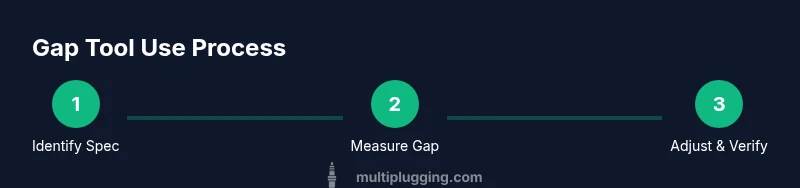
Start by identifying the exact gap specification for your engine. Clean the plug and examine the center electrode for wear or damage; a worn electrode can invalidate readings. Place the gap tool between the center and side electrodes and check for smooth fit without forcing the tool. Common mistakes include reading a used plug, measuring at an incorrect angle, or failing to account for electrode spring tension. Recheck multiple times and compare with a separate feeler gauge for consistency.
Setting gaps for different engine types
Different engines need different gap values. Car engines built in different years often share a range, but high-performance or modern engines may require tighter tolerances. Lawn equipment with small 4-stroke engines usually uses smaller gaps than automotive plugs. When in doubt, default to the OEM specification and verify with a second method, such as a calibrated feeler gauge or a digital gap meter if you have one. Consistency across all plugs in a set is critical for reliable ignition.
Safety, maintenance, and long-term care of your gap tools
Keep tools dry and free from oil or fuel residues to avoid corrosion and readings being skewed. Store gap tools in a protective case, and avoid bending delicate electrodes. Periodically clean the gauge faces with a lint-free cloth. If you drop a tool, inspect for misalignment or burrs that could damage plugs. Regularly recalibrate or verify your gauge against a known standard, especially if you notice inconsistent readings.
Real-world scenarios: cars, lawn equipment, and motorcycles
A car with a modern 4-cylinder engine may accept gaps around 0.040 inches, while a lawn mower with a small two-stroke or four-stroke engine may require gaps closer to 0.030 inches. Motorcycles, depending on design, can call for larger or smaller gaps; always cross-check the exact spec. In each case, using a gap tool Harbor Freight alongside a feeler gauge set gives you the confidence to adjust gaps without risking plug damage or misfires.
Post-test checks: reassembly, torque, and performance verification
After adjusting gaps and reinstalling, torque the plugs to the manufacturer’s specification using a torque wrench if available. Reconnect the battery and start the engine to listen for smooth ignition and normal idling. If misfires persist, re-check the plug seating and gap, or consider replacing a worn plug. Document the largest gap that worked for the current engine and apply the same procedure to remaining plugs in the set.
Tools & Materials
- spark plug gap tool Harbor Freight or equivalent(Choose a model that covers 0.028–0.060 inches (0.7–1.5 mm) and is easy to read.)
- feeler gauge set(Range should include common gaps; both metric and imperial readings are useful.)
- spark plug socket wrench and ratchet(Assists in removing/installing plugs without dropping debris.)
- rag or lint-free cloth(Keeps threads clean and prevents debris from entering the cylinder.)
- gloves and eye protection(Protects hands from hot parts and sharp edges.)
- torque wrench(Optional but recommended for correct reinstall torque per OEM specs.)
- anti-seize lubricant(Use only if recommended by OEM; helps with future removals.)
- clean work surface or mat(Prevents tool loss and keeps environment tidy.)
Steps
Estimated time: 20-40 minutes
- 1
Prepare and gather your tools
Cool down the engine and lay out tools on a clean surface. Verify you have a gap tool that covers the needed range and a calibrated feeler gauge. Safety first: wear gloves and eye protection.
Tip: Lay out parts by engine or plug type to prevent mix-ups. - 2
Find the exact gap specification
Check the vehicle manual or OEM documentation for the recommended spark plug gap. If absent, refer to a reputable database or the plug manufacturer’s guidelines.
Tip: Record the spec in a notebook for future maintenance. - 3
Remove the spark plug
Use a spark plug socket to carefully remove the plug from the cylinder head. Handle the plug by the threads to avoid damaging the electrode.
Tip: Inspect the plug for wear or fouling as part of the test. - 4
Inspect and clean the plug
Examine electrode wear, cracks, or carbon buildup. Lightly clean deposits, but replace if the plug is worn beyond spec.
Tip: If the plug is contaminated, replace rather than clean and reuse. - 5
Measure the gap with the tool
Place the gap tool between the center and side electrodes and check for a snug fit without forcing. Compare with the feeler gauge for cross-verification.
Tip: Take readings from multiple points on the electrode to confirm consistency. - 6
Set the gap and reinstall
If adjustment is needed, gently bend the side electrode only if the tool allows, or choose a plug with the correct gap. Reinstall the plug and torque to spec.
Tip: Use a torque wrench if the OEM specifies a torque value. - 7
Verify by rechecking and test run
After installation, recheck the gap on a known good sample and run the engine to confirm smooth operation.
Tip: Listen for misfires and watch for abnormal exhaust or idle.
FAQ
What is a spark plug gap tool and why do I need one?
A spark plug gap tool helps you measure and adjust the gap between the center and side electrodes of a spark plug. Proper gaps ensure reliable ignition and optimal engine performance, which is especially important after replacing plugs or performing maintenance.
A gap tool lets you measure the spark plug gap to keep ignition reliable after maintenance.
Can I rely on Harbor Freight tools for all my gap measurements?
For typical DIY maintenance, Harbor Freight gap tools paired with a feeler gauge set are generally sufficient. For precision-critical engines or professional service, consider higher-grade tooling and calibration checks.
For most DIY tasks, Harbor Freight tools are adequate, but for precision work, consider higher-grade instruments.
What gap range should I expect for most engines?
Many engines use gaps in the range of about 0.028 to 0.060 inches (0.7–1.5 mm). Always verify against the OEM specification for your specific engine and plug type.
Most engines use gaps around 0.028 to 0.060 inches; check your manual for exact numbers.
Is gap checking safe for beginners?
Yes, with proper safety precautions. Cool engine, disconnect the battery if needed, and work on a clean, organized bench. Take time to verify readings and avoid forcing tools.
Absolutely, just follow safety steps and take your time with readings.
What should I do if the plug is worn or damaged?
If the plug shows significant wear, fouling, or damage, replace it rather than attempt to reuse it. Worn electrodes can give false gap readings and poor ignition.
Replace worn plugs rather than trying to reuse them for accurate gaps.
Do I need to remove coils to measure gaps?
Typically you only need to remove the spark plug itself. Coil and ignition components remain in place, but always disconnect power and follow the vehicle’s service manual for specific steps.
Usually, you measure the plug; remove only the plug, not the coil, unless specified.
Watch Video
Main Points
- Know the exact gap spec for your engine.
- Use both a gap tool and a feeler gauge for accuracy.
- Inspect plugs for wear before adjusting gaps.
- torque to OEM specs after installation.