Oil on Spark Plugs: Troubleshooting Guide for DIYers
Learn rapid diagnostics and fixes for oil on spark plugs. Identify sources like PCV issues, valve covers, or worn rings, and follow a safe, step-by-step guide to restore ignition and prevent future fouling.


Oil on spark plugs is most often caused by oil entering the combustion chamber through worn piston rings, a faulty valve cover gasket, or a failing PCV system. Start with simple checks: verify oil level, inspect the PCV valve and hoses, and look for oil around the valve cover. If those basics pass, plan component replacements and a compression test.
Common causes of oil-coated spark plugs
According to MultiPlugging, oil on spark plugs is a common symptom of oil intrusion in gasoline engines and often signals a failing seal or PCV issue. When oil coats a plug, it creates a conductive path that defeats proper ignition and can cause misfires, rough idle, and increased fuel consumption. The most frequent culprits are a leaky valve cover gasket, a malfunctioning PCV system, or worn piston rings. In turbocharged or high-mileage engines, oil vapors can also bypass seal rings and accumulate on the plug tip. Before you yank the spark plug wires, perform a quick check of the oil level, dipstick for signs of contamination, and look for oil on the valve cover or around the spark plug well. The MultiPlugging team emphasizes a methodical approach: confirm oil on the plug, identify the oil source, and decide between cleaning or replacement based on damage and engine history. If you’re asking why would spark plugs have oil on them, the answer is usually oil intrusion from seals, PCV, or wear. This is a case where an ounce of prevention saves a pound of frustration, especially on engines with known oiling issues.
How oil affects ignition and engine performance
Oil that coats the spark plug insulator or electrode can dampen the spark, increase resistance, and alter the air-fuel mixture’s ignition timing. This leads to misfires, rough idle, reduced power, and higher fuel consumption. From a diagnostic standpoint, oil fouling is typically more severe on colder days or during extended idling, when oil has more time to condense and cling to plug surfaces. The MultiPlugging analysis shows that the type of oil and its viscosity matter: heavier synthetic oils can foul more aggressively under certain engine breathing conditions, while lighter oils may produce more gradual fouling. Understanding these dynamics helps you prioritize fixes, such as repairing a leaking gasket or addressing PCV faults, before proceeding to plug replacement.
Visual signs and inspection steps
Oil-fouled plugs usually exhibit a black, oily coating on the threads and insulator; the electrode metal may be shiny or glazed from heat and oil contaminants. When you inspect, remove one plug at a time with the correct socket and note the plug color, fouling pattern, and presence of oil in the well. A plug that is excessively oily often has poor heat transfer, which can cause accelerated electrode wear. Look for other oil signs along the valve cover gasket, PCV valve, oil leaks around the gasket seam, and evidence of oil in the intake tract. Document findings with clear photos and keep track of which cylinders show the issue to identify whether the problem is isolated or systemic.
Tracing the oil source: PCV, seals, rings
To determine the root cause, start by checking the PCV system: a stuck or over-pressurized PCV valve can push oil into the intake and onto plugs. Next, inspect the valve cover gasket and spark plug wells for leaks; a degraded gasket allows oil to creep down into the plug wells. For engines with high mileage, worn piston rings or worn oil-control rings on the piston can allow oil to enter the combustion chamber. Perform a compression test and, if needed, a leak-down test to quantify ring sealing. Isolating the source may involve inspecting the turbocompressor seals in forced-induction setups or evaluating boost pressures. The key is to test the path of least resistance first: PCV system, then gasket, then rings if needed.
Cleaning, repairing, and when to replace
If the plug is only lightly fouled and the electrode is clean, a careful cleaning with a dedicated spark plug cleaner may be feasible, but most mechanics recommend replacing heavily fouled plugs rather than attempting a cleanup. In most cases, you should replace all plugs in the affected bank to avoid mismatched ignition characteristics. While replacing, inspect and replace any worn or damaged wires, ensure the correct heat range, and use anti-seize as appropriate on the threads. After installation, perform a thorough burn-in by driving gently, monitoring misfires with an OBD reader, and confirming consistent combustion across all cylinders. Do not reuse fouled plugs; oil fouling often signals deeper engine or induction issues that should be addressed to prevent recurrence.
Prevention and safe driving practices
Proactive maintenance reduces the likelihood of oil fouling. Schedule regular oil changes with the correct grade, keep an eye on oil consumption, and ensure the PCV system remains clean and functional. Periodically inspect the valve cover gasket and PCV hoses for signs of wear or leaks, especially after head gasket repairs or crankcase breathing modifications. In high-load driving or turbocharged engines, check oil control rings and piston rings at service intervals appropriate for the vehicle’s age. Finally, maintain a habit of pulling plugs and inspecting them during major service intervals to catch fouling early before it causes ignition problems.
Steps
Estimated time: 90-120 minutes
- 1
Identify symptoms and collect plugs
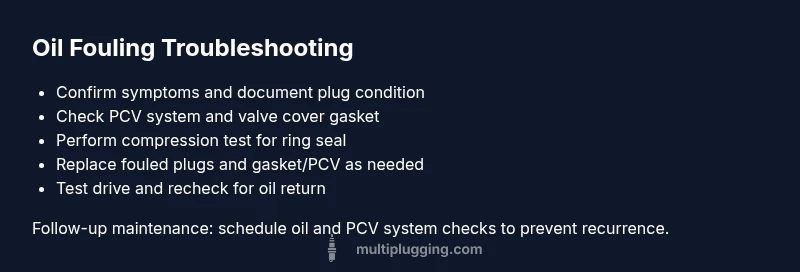
Document which cylinders show fouling and capture photos. Note engine behavior (misfire, rough idle, power loss) and any recent maintenance. This helps confirm whether oil fouling is isolated or widespread.
Tip: Take color photos from multiple angles for reference. - 2
Check oil level and condition
Inspect the dipstick and oil for unusual coloration or viscosity. A sudden spike in oil level or smoky exhaust can point to PCV issues or overfill, both common contributors to oil on plugs.
Tip: Don’t rely on a single oil sample—check multiple oil samples over a few days. - 3
Inspect PCV valve and hoses
Remove the PCV valve and inspect for sticking, clogging, or vacuum leaks. Flexible hoses should be intact with no cracks. Replace components as needed and recheck vacuum system performance.
Tip: Use a hand-held vacuum tester to verify valve function. - 4
Inspect valve cover gasket and wells
Look for oil residue around the valve cover gasket and plug wells. A degraded gasket can leak oil into the plug wells; reseal or replace the gasket if you see sign of leakage.
Tip: Clean plug wells before removing plugs to avoid confusion. - 5
Perform compression test
A compression test reveals ring seal integrity. Compare cylinder pressures to factory spec and note any significant differences that would indicate worn rings.
Tip: Use a dry and then a wet test for clearer results. - 6
Decide on repair path
If rings are worn, plan for engine work or replacement. If seals or PCV faults are the only issue, replace the faulty parts and re-test. Ensure ignition timing is correct after reassembly.
Tip: Don’t skip replacing all fouled plugs to avoid inconsistent ignition. - 7
Reassemble and validate
Install new plugs (and related parts), reconnect wiring, and start the engine. Check for smooth idle and no misfires. Run through a test drive and check for oil traces again.
Tip: Clear oil burn-off by a short drive before a final check.
Diagnosis: Plug shows heavy oil fouling and may cause misfire or rough idle
Possible Causes
- highWorn piston rings or oil-control rings
- highFaulty valve cover gasket
- highMalfunctioning PCV system or hoses
- lowOverfilled engine oil or oil leaks into the intake
Fixes
- mediumPerform compression test and leak-down test to assess ring seal
- easyReplace valve cover gasket and reseal plug wells
- easyRepair or replace PCV valve/hoses and clean related passages
- hardAddress oil level or oiling source, and consider engine overhaul if rings are worn
FAQ
What causes oil on spark plugs?
Oil on spark plugs is typically caused by oil entering the combustion chamber through worn piston rings, a faulty valve cover gasket, or a malfunctioning PCV system. In some cases, an overfilled oil system can contribute to the issue. Confirm the source with a systematic inspection and diagnostic tests.
Oil on spark plugs usually comes from worn rings, a bad valve cover gasket, or a faulty PCV system. A proper diagnostic test will identify the exact source.
Can I drive with oil on spark plugs?
Driving with oil fouling can mask engine problems and may cause misfires or catalytic converter damage. It’s best to limit driving and complete the diagnostic steps to fix the root cause safely.
It's not safe to drive long with oil fouling; get the issue diagnosed and repaired promptly.
Is oil on plugs always a sign of engine wear?
Not always, but oil fouling often signals worn rings or seals. Sometimes PCV or gasket issues are to blame. A thorough diagnostic will distinguish between temporary faults and long-term wear.
Usually it points to seals or PCV, but you should test to be sure.
How do I fix oil fouling on spark plugs?
Fixing fouling involves replacing faulty gaskets, PCV components, and potentially worn piston rings. After repairs, replace all fouled plugs and verify proper ignition with compression tests and test drives.
Fixing fouling means addressing the oil source and replacing the affected plugs.
Should I replace all spark plugs if one is fouled?
Yes, replace all plugs in the affected bank to restore balanced ignition and avoid mismatches in timing and gap. Inspect wires and ensure even heat range for all plugs.
If one plug is fouled, replace the whole set to avoid ignition imbalance.
Watch Video
Main Points
- Identify and confirm oil fouling before replacement.
- Check PCV, gaskets, and rings in order to isolate the source.
- Replace heavily fouled plugs and address root causes rather than cleaning.
- Prevent future fouling with regular maintenance and inspection.