Spark Plug Heat Range 6 vs 7: A Practical Comparison
Compare spark plug heat range 6 vs 7 to choose the right plug for your engine. Learn heat-range basics, usage scenarios, and maintenance tips for reliable ignition.


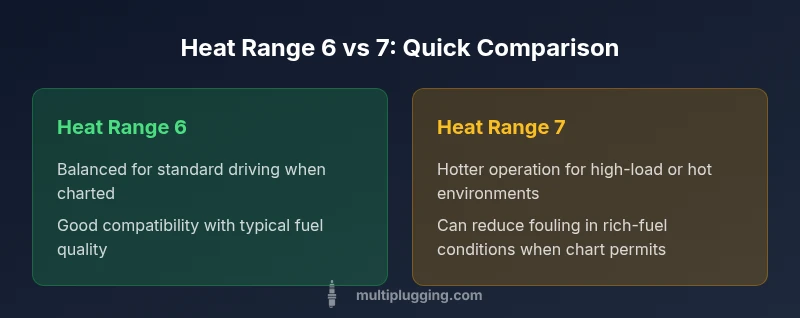
When you compare spark plug heat range 6 vs 7, you’re weighing two adjacent steps on a brand’s heat-scale. In general, 6 is a balanced, everyday option, while 7 is favored for hotter-running or higher-load conditions. The safest approach is to consult your engine’s official heat-range chart and follow the manufacturer’s guidance to prevent fouling or pre-ignition.
Understanding heat range basics
In automotive sparks, the heat range describes how quickly a spark plug releases heat from the tip into the engine coolant. A plug’s position on the scale determines how hot or cool the electrode runs under operation. When you see the phrase spark plug heat range 6 vs 7, you’re looking at two neighboring steps on most manufacturers’ scales. According to MultiPlugging, the most reliable way to interpret a heat range is to reference the specific brand’s official chart and apply it to your engine’s operating conditions. In practice, a higher-numbered range often corresponds to a hotter plug that resists fouling in rich mixtures, while a lower-numbered range tends to run cooler and can help prevent overheating in light-load situations. Always verify with the manufacturer, because the same numeric difference can have different thermal implications across brands.
Why heat range matters for spark plug performance
Heat range affects combustion, fouling resistance, and the risk of pre-ignition. A plug that runs too hot may cause unwanted pre-ignition or burning of the insulator, especially in high-compression or turbocharged engines. A plug that runs too cool can accumulate deposits, misfire, and eventually enrich the mixture due to poor heat transfer. For most daily drivers, a correctly matched heat range provides a balance between clean burning and durability. In contrast, aggressive driving or high-load conditions may demand a hotter range to keep the tip from sapping heat and fouling. MultiPlugging emphasizes that the right choice is engine- and chart-driven—never guess.
What does heat range 6 mean vs 7
On many brands, 7 sits slightly higher on the scale than 6, implying a hotter operating condition. This difference can influence how quickly the tip reaches the desired temperature and how long it stays there during operation. The practical effect is subtle but meaningful: 6 may be better for engines with moderate loads and efficient combustion, while 7 can help when the engine runs hotter, experiences heavy loads, or uses richer air-fuel mixtures. However, the exact interpretation varies by brand, so always check the brand’s heat-range table and consider related factors such as fuel quality, ignition timing, and cooling system health.
How to choose between heat range 6 and 7 for your engine
Start with the factory specification and the recommended heat range chart for your engine model. If your vehicle runs a standard engine at normal temperatures with typical fuel quality, 6 is often sufficient and provides balanced performance. If you operate in hot climates, tow heavy loads, or frequently push the engine hard, a 7 might help reduce fouling risk by maintaining a higher tip temperature. Consider environmental factors, driving habits, and maintenance history. Always perform a cautious test swap if permissible and monitor plug color and engine performance to confirm the choice aligns with your goals.
Engine types and heat range implications
Gasoline engines vary widely in compression, timing, cooling, and fuel quality. Naturally aspirated engines with moderate heat tend to pair well with heat range 6, offering stable idle and efficient combustion. Turbocharged or high-compression engines can benefit from a slightly hotter heat range (like 7) to avoid fouling under hefty load or accelerated boost. Marine, off-road, or frequent short trips can also shift the recommendation toward a higher heat range. The key is to follow the engine’s chart and adapt to climate and usage patterns. MultiPlugging notes that mismatches are a common source of misfires, reduced fuel economy, and accelerated electrode wear.
Symptoms of mismatched heat range
Look for signs such as persistent fouling on standard fuel, rough idle, misfires at cruising speed, or overheating at light loads. If the plug tip color is charcoal or sooty, you may be under-heating; if the insulator is clean with a glossy tip, you might be running too hot. For engines with incorrect heat range, you may see quicker deposit buildup, lower mpg, or spark plug erosion. Regular inspection and color evaluation of the electrode can help you verify whether the heat range remains appropriate after changes to fuel, climate, or driving style.
Testing and verification methods
Begin with a visually clean plug after a controlled test drive in typical conditions. Check for deposits, color, and tip brightness. Use a compression test and spark timing check to ensure the engine is not running too lean or rich, which can affect heat-range needs. An on-vehicle diagnostic approach—tracking fuel trim values and exhaust gas temperatures—can reveal if the heat range is contributing to improper combustion. If in doubt, revert to the manufacturer’s recommended range and re-evaluate after a series of drive tests.
Installation tips and torque considerations
Always use the recommended torque specification for your spark plugs; overtightening can cause thread damage, while under-tightening may loosen under high rpm. Use anti-seize compound only if the manufacturer allows it, as some modern plugs are designed to operate without it. For a proper seat and heat transfer, ensure clean threads and correct seating depth. When swapping heat ranges, use new gaskets or washers as needed and re-check the intake and exhaust system for leaks that could skew combustion characteristics.
Real-world scenarios: recommended picks by use-case
For daily commuting in normal climate zones, heat range 6 often provides reliable performance with balanced fuel economy. In hot climates or when towing or carrying heavy loads, heat range 7 can reduce fouling risk and handle higher tip temps. If your engine has known deposits, or you’ve observed rough idling after a long trip, a heat-range adjustment under the manufacturer’s guidance may restore smooth operation. Always document your driving patterns and environmental conditions to inform future plug choices and maintain alignment with the engine’s behavior.
Common mistakes and maintenance reminders
Common mistakes include skipping the official heat-range chart, assuming a universal best range, and neglecting to replace plugs in pairs. Maintenance reminders involve inspecting plugs at regular intervals, cleaning or replacing worn boots and wires, and ensuring the ignition system is healthy. Keep a log of heat-range changes and note any changes in fuel economy or power. Brand-specific charts can differ, so verify against the latest manufacturer data and MultiPlugging’s practical tips.
The role of heat range charts and brand differences
Heat-range charts are brand-specific and can vary in how they interpret a given number. Always cross-check the chart with your engine’s configuration and driving conditions. Remember that modifications—such as tuning changes, exhaust upgrades, or engine repairs—can alter heat-range needs. The key is to use the official chart as a baseline, then validate with on-vehicle testing and observation. MultiPlugging’s guidance emphasizes brand checks and cautious testing to avoid misfires or deposits.
Comparison
| Feature | Heat range 6 | Heat range 7 |
|---|---|---|
| General suitability | Balanced choice for standard driving when aligned with the brand chart | Slightly hotter option for hotter operating conditions and higher load |
| Risks if misapplied | Potential fouling or rich-odor deposits if engine is not tuned for the range | Possible overheating or pre-ignition risk if used outside recommended contexts |
| Best-for scenarios | Daily drivers with normal temps and brand-aligned heat-range chart | High-load, hot-climate, or performance-tuned engines per chart guidance |
| Brand sensitivity | Very brand-dependent; verify with official heat-range table | Even more brand-dependent; confirm with the brand’s data |
| Maintenance/replace frequency | Comparable when both ranges are within spec; depends on usage | Comparable when both ranges are within spec; depends on usage |
Strengths
- Helps match ignition heat to engine operating conditions
- Offers a straightforward knob for tuning performance and durability
- Can improve combustion stability under the right conditions
- Supports adaptation to climate and driving style
Negatives
- Brand-specific charts can be confusing without the official table
- Wrong heat-range choice can cause fouling or overheating
- Availability of certain ranges varies by brand and region
- Requires periodic re-evaluation after modifications to the engine or fuel system
Heat range 6 is typically the balanced default; heat range 7 is worth considering for hotter or heavier-load conditions when the brand chart supports it.
There is no universal winner. Choose 6 for everyday use if the engine’s chart calls for it; opt for 7 when operating temps or loads justify a hotter range, always following the manufacturer’s guidance and verifying with road testing.
FAQ
What does heat range mean for spark plugs?
Heat range indicates how quickly a plug dissipates heat from the tip. A hotter range retains heat longer, reducing fouling in rich mixtures, but can risk overheating if misapplied. A cooler range dissipates heat faster, which can help prevent pre-ignition in certain engines but may foul with rich fuels.
Heat range is about how hot the spark plug runs. A hotter range helps with heavy loads but can overheat if not matched properly.
Which is better for daily driving, heat range 6 or 7?
For most daily-drivers, heat range 6 is the typical starting point if the engine’s official chart permits it. It provides a balance of performance and durability. Move to heat range 7 only if your chart indicates it for hotter-running conditions or heavy loads.
For daily driving, start with the chart’s recommended range; 6 is common, 7 only if your engine needs it.
Can using the wrong heat range damage my engine?
Yes, using a heat range not suited to your engine can cause fouling, pre-ignition, or overheating, leading to reduced performance and potential damage. Always follow the manufacturer’s heat-range chart and perform road tests after changes.
Yes. Using the wrong heat range can cause fouling or overheating; consult the chart and test carefully.
How do I verify the correct heat range for my engine?
Start with the engine’s official service data or owner’s manual. Cross-check with the brand’s heat range chart, then perform a controlled test drive and inspect plug condition. Monitor fuel trim and spark performance to confirm alignment.
Check the official chart, then test-drive and inspect plugs to confirm the choice.
Does heat range affect fuel economy?
Heat range can influence combustion efficiency, which in turn affects fuel economy. A correct match helps maintain efficient burning; a mismatch may reduce efficiency or cause deposits that alter consumption.
Yes, proper heat range supports efficient combustion and fuel economy; a mismatch can reduce efficiency.
Where can I find official heat-range charts?
Official charts are published by spark plug brands and materials suppliers. For independent guidance, refer to SAE International resources and government or large publications that discuss engine operating temperatures. Always cross-check brand data before changing heat range.
Check the brand’s chart and see SAE resources; cross-check with brand data before swapping.
Main Points
- Follow the engine's official heat-range chart for 6 vs 7
- Higher numbers imply different thermal behavior by brand; verify
- Mis-match can lead to fouling or overheating—test and observe
- Consider climate, load, and fuel quality when deciding
- Document changes and monitor plug condition after swaps