Spark Blocks: A DIY Guide to Diagnose, Repair, and Prevent
A practical, step-by-step guide to identifying spark blocks, diagnosing root causes, and repairing or replacing spark blocks to restore engine performance safely.


You will learn how to identify spark blocks, diagnose common causes, and perform safe, informed steps to clean, repair, or replace spark blocks. This guide covers essential safety, basic testing, and when to seek professional help for optimal engine health.
What are spark blocks and why they matter
Spark blocks refer to the phenomenon where one or more ignition events in an engine cylinder fail to fire as expected. In practical DIY terms, a spark block is when a cylinder doesn’t receive a reliable spark, which can cause misfires, reduced power, rough idle, and higher fuel consumption. According to MultiPlugging, addressing spark blocks early saves costly repairs and preserves engine longevity. The MultiPlugging team emphasizes that diagnosing spark blocks is a multi-step process, not a single test, because many factors—from worn spark plugs to faulty ignition coils—can produce similar symptoms. Understanding spark blocks helps you target maintenance, avoid unnecessary parts replacement, and keep your engine running smoothly under typical daily driving conditions.
Symptoms that point to spark blocks
Diagnosing spark blocks starts with recognizing a set of telltale symptoms. Common signs include a rough idle, engine misfires under load, reduced acceleration, and occasional stalling, especially when the engine is cold. A noticeable drop in fuel economy can accompany misfires, as the engine management system compensates for irregular combustion. If you notice a check engine light with misfire codes (P0300 series), it’s a strong hint that spark blocks may be involved. Copious smoke or strong fuel odor can appear when the air-fuel mix becomes unstable due to misfiring cylinders. Always rule out other culprits—bad fuel, vacuum leaks, or a clogged air filter—before concluding spark blocks are the root cause. The goal is to confirm consistent misfire behavior across cylinders rather than a one-off blip.
Diagnostic approach: a structured plan
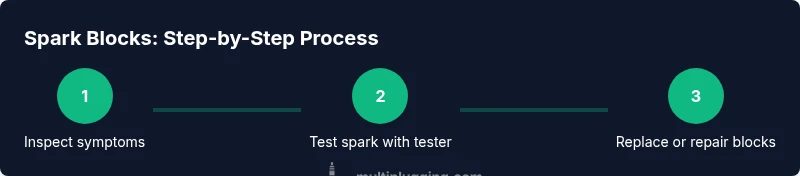
A structured plan helps isolate spark blocks without unnecessary parts swapping. Start with a visual inspection of spark plugs and ignition wires for fouling, cracks, or oil deposits. Use a spark plug tester to verify spark at the plug end under typical cranking conditions. If spark is present, move to coil and wiring checks—test ignition coils for consistent secondary resistance and inspect spark plug boots for moisture or degradation. Expand the assessment with a basic compression test to ensure mechanical issues aren’t masquerading as ignition problems. If the engine runs smoothly on a two-cylinder test (by disconnecting a coil or plug wire temporarily and observing changes), you can pinpoint the malfunctioning block more precisely. The aim is to build a cascade of evidence rather than rely on a single indicator.
Building a home diagnostic toolkit
A reliable DIY toolkit makes spark block diagnosis faster and safer. Ensure you have a properly rated spark plug socket, a torque wrench, a plug-gap tool, and a spark plug tester. A digital multimeter helps assess coil resistance and wiring integrity, while an OBD-II scanner reveals misfire codes and fuel trim data. For more advanced checks, a compression tester and a gas leak detector can be valuable, though not strictly required for basic diagnostics. Organize your tools in a labeled container and keep the engine cool before starting work. Safety gloves and eye protection are non-negotiable when dealing with ignition components or fuel system checks.
Interpreting results and decision points
Interpreting diagnostic results requires seeing a consistent pattern across steps rather than isolated readings. A foul plug, if present, should be visually clean or slightly black but free of oil or fuel flooding. A weak spark or inconsistent coil output suggests testing of secondary ignition paths, including wires and boots. If compression is normal across all cylinders but misfires persist, you likely have an ignition issue rather than a mechanical one. When results are inconclusive, performing a controlled replacement of suspected components (starting with the cheapest option, like a fouled plug) can help confirm the culprit. Maintain a log of tests, readings, and replacement parts for future reference and preventive maintenance planning.
Maintenance and prevention strategies
Prevention is better than cure when it comes to spark blocks. Replace spark plugs at manufacturer-recommended intervals and use the correct heat range and heat rating for your engine. Maintain clean plug wells and ensure proper sealing to prevent oil ingress, which can foul plugs and promote misfires. Use anti-seize where recommended by the plug manufacturer and torque plugs to spec to avoid overtightening. Regular coil and wire inspections help catch wear before it triggers symptoms. Schedule periodic diagnostic checks if you regularly operate in harsh conditions, such as extreme heat or frequent short trips, which stress ignition components more quickly.
When to replace vs clean vs upgrade
Not all spark blocks are created equal, and decisions depend on the root cause. If plugs are fouled with oil or fuel, cleaning is not a long-term fix; replacement is typically best. If coils or wires show wear or intermittent sparking, replacing those components often resolves the problem. In high-mileage engines, upgrading to a higher-performance plug type or more robust ignition components can offer reliability gains, but verify compatibility with your engine’s ignition system and ECU (engine control unit). Always balance cost, reliability, and the engine’s intended use when deciding to replace or upgrade.
Common mistakes and safety warnings
A frequent error is rushing to replace parts without validating the root cause, which wastes time and money. Another mistake is using wrong plug heat range or incorrect torque, which can damage threads or create future misfires. Never disconnect power while the engine is hot, and always work with the battery disconnected when removing ignition components. Store removed parts in labeled bags and avoid mixing cylinder-specific parts to prevent cross-contamination. If you’re unsure, consult your service manual or reach out to a qualified technician for advanced diagnosis.
Spark blocks and engine health: practical takeaways
Understanding spark blocks gives you a practical framework for diagnosing and maintaining ignition systems. By combining symptom observation, controlled testing, and careful replacement decisions, you protect engine performance and fuel efficiency. The core idea is to replace only the components that show clear signs of failure while keeping already functioning parts in service. Through consistent checks and a thoughtful maintenance plan, you reduce the risk of unexplained misfires and keep your vehicle running reliably. The MultiPlugging team would emphasize that ongoing education and careful record-keeping are essential for long-term engine health.
Tools & Materials
- Spark plug socket with 3/8-inch drive(Magnetic insert preferred; compatible with your plug type)
- Torque wrench(Use to spec when reinstalling plugs)
- Gap tool or feeler gauge(Set to manufacturer-recommended gap for your plug type)
- Digital multimeter(For measuring ignition coil resistance and related circuits)
- OBD-II scanner(Read misfire codes and fuel trim data)
- Compression tester(Tests cylinder sealing and piston integrity)
- Spark plug tester(Quick spark sanity check at plug boot end)
- Replacement spark plugs(Match heat range and reach; keep spare gappers)
Steps
Estimated time: 90-120 minutes
- 1
Prepare and safety check
Park on a flat surface, engage parking brake, and disconnect the negative battery lead. Allow the engine to cool completely to avoid burns. Gather tools and wear protective gloves and safety glasses before touching ignition components.
Tip: Cooling time reduces risk of injury and helps you handle plugs without warping metal threads. - 2
Locate and assess spark blocks
Identify each spark block (spark plug) location on your engine using the service manual or an online diagram. Visually inspect boots and ignition wires for cracks, oil, or moisture before removal. Label each wire/coil to keep track of cylinder mapping.
Tip: Taking photos during inspection prevents mix-ups during reassembly. - 3
Remove first spark block
Carefully loosen and remove the spark plug using the correct socket, keeping threads clean. Do not use excessive force; remove gradually to avoid cross-threading. Inspect the plug for signs of fouling, oil, or wear.
Tip: If the plug is tight, back it out a little and re-seat before full removal to prevent damage. - 4
Test spark and condition
Attach a spark plug tester or use a coil tester to verify spark at the boot end. If spark is weak or inconsistent, move to coil and wiring checks. Record observations for each cylinder.
Tip: Spark should be bright and blue; a yellow or orange spark indicates a problem. - 5
Conduct compression check
With all plugs removed, run a compression test on each cylinder to check for sealing issues. Compare values across cylinders; a significant deviation suggests mechanical problems rather than ignition faults.
Tip: Follow the tester’s manual for cranking speed and lubrication steps to ensure accurate readings. - 6
Inspect ignition coils and boots
Check ignition coils and boots for cracks, corrosion, or oil contamination. Replace any weakened boots and test coil resistance against service specs. Replacing the faulty coil often resolves misfire symptoms without touching plugs.
Tip: Do not reuse damaged boots; improper sealing can cause future misfires. - 7
Gap, clean, or replace plugs
If plugs are fouled or worn beyond specification, replace them with new units. If plugs are reusable, clean deposits and re-gap to the manufacturer’s specification before reinstalling. Re-torque plugs to the exact spec.
Tip: Always gap plugs after cleaning, not before; heat cycling can alter gap values slightly. - 8
Reassemble and verify
Reconnect ignition components, replenish any lost fluids, and reconnect the battery. Start the engine and monitor for smooth operation and absence of misfire codes. Run a short drive to confirm performance under load.
Tip: Clear any diagnostic codes with your scanner after the repair and re-check later. - 9
Document results and plan maintenance
Note which cylinders were problematic, what parts were replaced, and maintenance intervals. Schedule a follow-up check within a few thousand miles to ensure long-term reliability.
Tip: Keeping a maintenance log makes future diagnostics faster and cheaper.
FAQ
What exactly are spark blocks and how do they affect my engine?
Spark blocks describe cylinders that fail to ignite reliably, causing misfires and reduced performance. They stem from worn plugs, faulty coils, or poor connections. Proper diagnosis separates ignition issues from mechanical faults.
Spark blocks are misfires in one or more cylinders caused by ignition problems. Diagnosis helps you pinpoint whether the issue is plugs, coils, or wiring.
How can I tell if a spark block is faulty?
Look for consistent misfires on a specific cylinder, check spark quality with a tester, and verify coil resistance. A combination of abnormal compression readings and misfire codes strengthens the case for a faulty block.
Check the cylinder that misfires, test the spark, and confirm with compression readings.
Should I replace all spark blocks at once?
If multiple blocks show wear or fouling, replacing them together saves time and avoids uneven performance. If only one or two blocks show issues, you can replace those first and monitor results.
If several blocks show wear or fouling, replace them all; otherwise fix the culprit first and reassess.
Can spark blocks cause long-term engine damage?
Unchecked misfires can stress the catalytic converter and fuel system, and they may mask other issues. Addressing spark blocks promptly reduces the risk of secondary damage.
Yes, misfires can lead to bigger problems if ignored; fix the blocks and inspect related systems.
What maintenance steps help prevent spark blocks?
Follow the manufacturer’s spark plug interval, use the correct heat range, keep ignition wires clean and dry, and perform regular diagnostics to catch wear early.
Stick to replacement intervals, keep wires dry, and run periodic checks.
Do I need specialized tools to diagnose spark blocks?
A basic toolkit (socket, torque wrench, gap tool, spark tester) plus an OBD-II scanner suffices for most home diagnostics. More advanced tests require professional equipment.
You can start with a basic set; advanced testing may require a shop.
Watch Video
Main Points
- Identify spark blocks by symptoms and tests.
- Use a structured diagnostic plan to isolate failures.
- Replace worn or fouled blocks rather than cleaning as a fix.
- Torque and gap accuracy prevent future issues.
- Maintain logs for long-term engine health.