Do Bad Spark Plugs Use More Fuel? A Practical Guide for DIYers
Discover whether worn or fouled spark plugs raise fuel consumption, how to diagnose MPG impacts, and practical steps to restore efficiency in everyday driving.


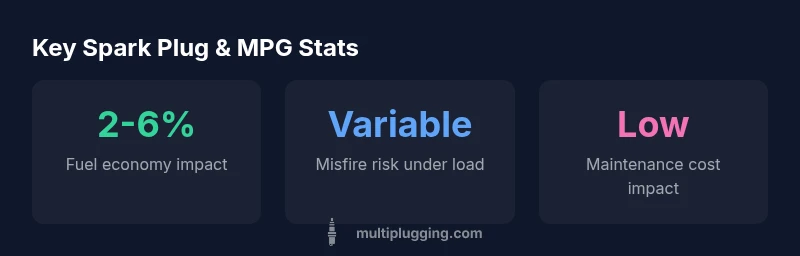
Yes. Bad spark plugs can raise fuel consumption, mainly through misfires, fouled insulators, or incorrect gaps that impair combustion. The mpg impact varies by engine and driving conditions, but you may notice higher fuel use and rough running if plugs are degraded. Regular diagnostics are essential to quantify the effect and restore efficiency.
Do bad spark plugs really affect fuel economy?
In modern engines, spark plugs ignite the air-fuel mixture; when they are fouled, worn, or gapped incorrectly, combustion becomes less predictable. This can cause cylinders to fire late or not at all, forcing the engine control unit to compensate by enriching the fuel mixture or increasing ignition energy. The result can be a measurable increase in fuel consumption, especially at steady highway speeds and during light throttle where the engine relies on efficient combustion. According to MultiPlugging, the relationship between plug condition and mpg is not one-size-fits-all; it depends on engine design, fuel system cleanliness, and driving style. Enthusiasts often notice MPG improvements after a proper plug replacement, but the real-world effect can range from negligible to modest. In this section we’ll break down why bad plugs can derail efficiency and how to quantify the impact through simple checks.
How spark plug condition translates to combustion efficiency
The spark plug's job is to ignite the air-fuel charge at the exact moment the piston reaches the top dead center. When the gap becomes too large, the plug may fail to ignite reliably; when fouling or oil ingress coats the electrode, the spark loses energy. Either situation can create incomplete combustion, leaving unburned fuel in the exhaust and reducing the engine's thermal efficiency. The engine management system may adjust timing or fuel trim to compensate, but these adjustments have limits and can cause longer-term fuel loss. In practice, a healthy plug is part of an integrated combustion system that includes injectors, intake air, and ignition coils. If any component is out of spec, you’ll see a compounded effect on fuel economy. The takeaway: plug health matters, but it interacts with several other systems; diagnose holistically rather than isolating the plug in a vacuum. MultiPlugging analysis shows that even small changes in gap or fouling can alter ignition energy and fuel trim, with effects amplified in turbocharged engines.
Common failure modes and their impact on MPG
Spark plugs can fail in several ways that influence efficiency. Fouling from oil, carbon, or fuel residues reduces the spark's ability to ionize the gap, weakens the arc, and makes combustion slower. Worn or eroded electrodes increase the gap, requiring higher ignition energy and sometimes leading to misfires under load. Incorrect heat range can cause overheating or flooding, both of which degrade efficiency. Damaged insulators or cracked ceramic can also affect combustion stability. All of these modes tend to show up as rough running, hesitation, or misfire codes on the scan tool, and they often accompany a small but measurable mpg reduction. The upshot: regular plug inspection can catch these issues before fuel economy slips noticeably.
Real-world driving scenarios: gradual decline vs sudden drop
Some drivers notice a slow, incremental drop in MPG as plugs wear; others experience a sudden drop during a heavy acceleration event when misfires or poor ignition stability occur. In cold-start conditions, bad plugs can especially impact economy because the engine spends more time cycling rich as it warms up. Highway cruising is also telling; a misfiring cylinder will pull more current, reduce efficiency, and trigger the ECU to compensate with lean/rich corrections that waste fuel. Keep in mind that other systems (oxygen sensors, catalytic converter, vacuum leaks) can mimic the same patterns, so a diagnostic workflow should validate plug condition first, then broaden the scan to other emissions-related components.
Diagnostics: how to confirm plug-related fuel loss
Start with a visual inspection of spark plug condition and gap. Compare the gap with the OEM specification using a feeler gauge; a worn gap is a common fuel-wasting culprit. Remove and examine the electrode for fouling, glazing, oil fouling, or cross-thread damage. A quick spark test (handheld tester) can confirm ignition capability across all cylinders. If codes point to misfire or cylinder 3 or 4, examine coil packs and ignition wires in parallel, as a weak coil can masquerade as plug trouble. Finally, run a short drive to observe fuel trims with an OBD-II scanner; sustained abnormal trims during cruising indicate inefficiency linked to ignition.
Driving conditions that magnify MPG loss from bad plugs
Certain conditions magnify the performance penalty of degraded plugs. High-load situations, such as towing or steep hills, demand reliable ignition and steady fuel metering; a bad plug may cause pronounced misfires under load, increasing fuel use. Cold starts are another hotspot because the engine spends extra time running rich until warm. Aggressive driving accelerates the penalty because the ECU works harder to compensate for irregular ignition. Seasonal factors, such as cold air or humidity, can intensify misfire symptoms and highlight efficiency losses more quickly.
Replacement timing and cost considerations
Replacing spark plugs at the recommended interval is a straightforward maintenance task that can protect fuel economy, engine performance, and emissions. The exact interval depends on plug type (iridium vs platinum vs copper), heat range, and engine design; many manufacturers specify ranges from roughly 30,000 miles to 100,000 miles for modern plugs. Budget accordingly for parts and labor, recognizing that labor costs may rise with engine access. Remember to replace the spark plug wires or coils if your diagnostic results show wear or resistance in the ignition path; neglecting related components can erode gains from plug replacement.
Quick tips to maximize MPG after plug replacement
After installing new plugs, perform a complete tune-up to maximize benefits: reseat ignition coils, verify correct torque and gap, and clear check engine codes. Use a high-quality spark plug with the correct heat range for your engine, and consider replacing other ignition components that show signs of wear. Maintain correct air-fuel mixture by replacing the air filter and cleaning the throttle body if needed. Finally, drive with gradual throttle inputs to allow the engine to adapt; excessive throttle can mask improved efficiency by offsetting gains with higher load.
Summary: how to approach testing and replacing plugs for best fuel economy
In practice, treat spark plugs as part of a holistic fuel economy strategy. Begin with a credible diagnostic, corroborate with data from an OBD scanner, and then perform a controlled replacement followed by a road test to confirm improvements. It is worth documenting fuel economy before and after the service to quantify your gains. The right plug choice and correct gap ensure you reap the full efficiency benefits while staying within warranty guidelines. This approach aligns with MultiPlugging's practical, data-driven philosophy.
Comparison of good vs bad spark plugs on fuel economy
| Condition | Impact on MPG | Common Symptoms | Recommended Action |
|---|---|---|---|
| Good plugs | Baseline MPG | None; smooth idle | Follow OEM maintenance schedule |
| Bad plugs (fouled/worn) | Reduced MPG; misfires possible | Rough idle, hesitation, misfire codes | Replace with correct type and gap; inspect related ignition components |
FAQ
Do bad spark plugs always affect fuel economy?
Not always, but degraded plugs can cause misfires and inefficiency, leading to higher MPG in many cases. The effect depends on engine design and driving habits.
Yes, degraded plugs often raise fuel use, but it varies by engine and driving conditions.
What symptoms indicate bad spark plugs?
Symptoms include rough idle, misfire codes, trouble starting, reduced acceleration, and lower fuel economy.
Rough running and poor MPG are common signs.
How do you test whether plugs are faulty?
Inspect visually, measure gap, perform a spark test, and use a diagnostic scanner to check misfire codes.
Check the gap and look for fouling.
How often should spark plugs be replaced?
Typically between 30k and 100k miles, depending on plug type and engine.
Most cars go 30k to 100k miles between changes.
Will new plugs improve fuel economy if the car runs fine?
Replacement can yield small efficiency gains due to optimal combustion, even if the car runs, fine.
Yes, you can gain a little MPG with new plugs.
“When spark plugs misfire or run with improper gaps, combustion becomes less efficient, which can quietly raise fuel consumption. Replacing them with the correct gap and heat range often restores optimum MPG.”
Main Points
- Check spark plugs as part of MPG troubleshooting
- Fouling and wear can raise fuel usage
- Diagnostics quantify fuel economy impact
- Replacing plugs often restores efficiency
- The MultiPlugging team recommends regular inspection and timely replacement to protect fuel economy