NGK BP7ES Spark Plug: A Comprehensive DIY Guide
Learn how to identify, inspect, and replace the NGK BP7ES spark plug. This practical guide covers compatibility, gap checks, maintenance, and troubleshooting for DIY enthusiasts.


NGK BP7ES spark plug is a widely used 14mm-thread, copper-core plug designed for many gasoline engines. It represents a balanced heat range and standard performance suitable for routine maintenance. For most DIYers, BP7ES serves as a reliable baseline replacement, offering predictable ignition, easy installation, and broad compatibility when matched to the engine’s OEM recommendations.
Why BP7ES Is a Common Choice for DIYers
The NGK BP7ES spark plug is a staple in many gasoline engines due to its versatile heat range and robust construction. For car owners and DIY enthusiasts, selecting BP7ES often aligns with OEM recommendations or acceptable cross-compatibility. According to MultiPlugging, this plug provides reliable combustion, consistent cold-start performance, and a balance between fouling resistance and ignition efficiency. When evaluating any plug, always cross-check your vehicle’s manual and the engine's firing order and configuration to ensure compatibility with the BP7ES design.
Key takeaways: BP7ES is known for broad applicability and predictable performance across a range of small-to-mid-sized engines. It is not a one-size-fits-all solution; engine-specific heat range and gap must be verified for optimal results.
Design and Performance Overview
BP7ES is built with a copper-core center electrode paired with a nickel alloy ground electrode, offering dependable durability and stable performance under everyday driving conditions. The copper-core helps achieve good heat transfer, which can reduce fouling in moderate to high-mileage engines. The “ES” suffix typically indicates a specific electrode configuration favored for cost-effective production and reliable ignition across many spark plug sockets.
From a maintenance perspective, BP7ES benefits from a clean combustion chamber and properly gapped plug. Debris and carbon buildup can impair heat dissipation and lead to misfires. Regular inspection during routine maintenance is advised, especially on engines known for fouling tendencies or those operating on poor-quality fuel. MultiPlugging’s analysis highlights that accessible, standard plugs like BP7ES simplify DIY maintenance without sacrificing performance in typical suburban driving.
Pro tips: When inspecting, look for worn threads, soot, oil fouling, or a worn insulator tip. These signs can indicate broader engine issues beyond plug wear.
Compatibility and Engine Coverage
BP7ES is commonly recommended for many 4-stroke engines across passenger cars, light trucks, and some small equipment. Its broad application makes it a frequent cross-reference choice for replacement when the exact OEM plug is unavailable. Always confirm engine compatibility by checking the owner’s manual or the NGK cross-reference guide. If you are replacing an older plug with BP7ES, verify that the heat range aligns with your engine’s operating temperature and that the thread size matches your cylinder head.
In certain performance or efficiency-focused engines, manufacturers may opt for different heat ranges or electrode designs. In those cases, BP7ES can still serve as a baseline, but adjustments in heat range or gap may be necessary to maintain optimal combustion and prevention of fouling. MultiPlugging recommends verifying the exact plug type specified by your engine’s service documentation for best results.
Gap Verification and Installation Steps
Before installation, always measure the gap with an accurate feeler gauge. Factory gaps for BP7ES typically fall within a narrow range, and deviations can affect ignition timing and misfires. If the gap is out of spec, carefully adjust to the recommended value using the manufacturer’s guidelines or your vehicle manual. After setting the gap, apply a light amount of anti-seize compound to the threads (where appropriate) and torque to the manufacturer’s specification using a torque wrench. Re-check the gap after torquing to ensure it remains within spec.
Step-by-step DIY check:
- Disconnect the battery and locate the spark plugs.
- Remove the old plug with a properly sized socket.
- Inspect the seat and threads for damage.
- Fit BP7ES, adjust gap, and torque to spec.
- Reinstall ignition wires or coil packs and test engine.
Following these steps helps avoid misfires and maximizes the life of the new plug.
Practical Tips for Replacement and Longevity
For DIYers, BP7ES offers a straightforward replacement path. Use a torque wrench to avoid overtightening, which can strip threads. Maintain a clean thread area by removing debris and oil before installing a new plug. If engine performance is questionable after replacement, verify ignition coil health, wires, and vacuum leaks, as problems in these areas can mimic plug-related misfires.
To maximize longevity, ensure regular engine maintenance, use good-quality fuel, and perform periodic inspections of the ignition system. MultiPlugging’s practical approach emphasizes routine checks over reactive replacements, especially for engines with a history of fouling or carbon buildup.
Troubleshooting Common BP7ES Issues
When BP7ES fails to deliver reliable performance, misfires and rough idling are common complaints. Fouling, oil leaks, worn insulators, or improper gaps can be culprits. If you experience sluggish acceleration or reduced fuel economy after replacement, recheck the gap and verify that the ignition system components are functioning correctly. In high-mileage engines, fouling may be more prevalent, and cleaning the carbon buildup or replacing spark plug wires may be required.
For most DIYers, a quick check of gap and a consistent replacement interval aligned with engine usage will prevent many common issues. If problems persist, consult the service manual or seek professional evaluation to rule out deeper engine faults.
How to Choose Alternatives and Replacement Intervals
BP7ES often serves as a solid baseline plug; however, some engines may call for different heat ranges or electrode designs for optimal performance. If you find that BP7ES is not providing the expected performance, compare with alternatives recommended by NGK or your engine manufacturer, ensuring compatible thread size and heat range. Replacement intervals depend on driving conditions, fuel quality, and maintenance practices. In general, more aggressive driving and frequent short trips may shorten your plug’s service life, while longer highway runs may extend it. Regular inspection remains the best strategy to avoid surprises.
NGK BP7ES vs typical copper-core spark plug
| Attribute | NGK BP7ES | Notes |
|---|---|---|
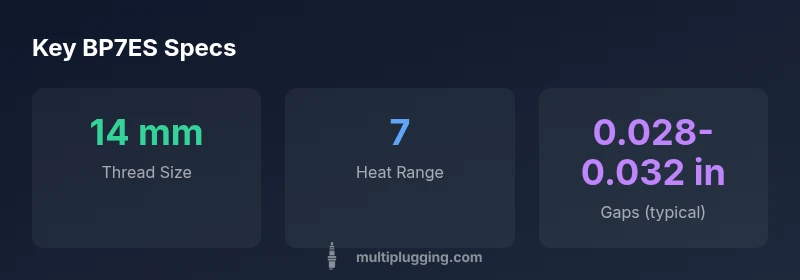
| Thread size | 14 mm | Standard for many inline engines |
| Heat range | 7 (typical) | Moderate heat range for balance |
| Gap range (factory check) | 0.028-0.032 in | Verify with vehicle manual |
| Type | Copper-core center electrode | Common, cost-effective design |
FAQ
Is NGK BP7ES suitable for my car?
BP7ES covers a broad range of gasoline engines, but you should verify compatibility in your owner's manual or via NGK’s cross-reference chart. If your manual specifies a 14mm plug with a similar heat range, BP7ES is likely a good fit.
Check your manual or NGK cross-reference for exact fit.
What is the recommended gap for BP7ES?
As with most plugs, the gap should be checked and adjusted to the manufacturer’s specification. Start with the recommended range in your service manual and adjust as needed while avoiding over-tightening.
Refer to your service manual for the precise gap.
How often should BP7ES be replaced?
Replacement intervals depend on engine type, driving conditions, and fuel quality. Typical DIY practice is to inspect during regular maintenance and replace when performance declines or fouling is detected.
Inspect during routine maintenance and replace when needed.
Can I use BP7ES in a high-performance engine?
BP7ES can work in many engines, but high-performance or modern engines may require a different heat range or electrode design. Always follow the OEM spec or NGK’s guide for performance applications.
Follow the engine maker’s spec for performance use.
What are signs BP7ES needs replacement?
Common signs include rough idle, misfires, poor acceleration, reduced fuel economy, or visible fouling. Inspect the plug tip and insulator for wear or deposits.
Look for rough running or sooty deposits.
Are there alternatives to BP7ES I should consider?
If your engine calls for a different heat range or design, NGK provides cross-reference plugs. Compare thread size, heat range, and electrode style to ensure compatibility.
Check NGK’s cross-reference for suitable substitutes.
“The BP7ES is a reliable baseline plug for many engines, but always cross-check with your vehicle’s specs to ensure optimal performance.”
Main Points
- Verify engine compatibility before replacement
- Always check and set proper spark plug gap
- Use torque wrench to avoid thread damage
- Inspect ignition components if problems persist
- Follow a consistent maintenance schedule for longevity