Is Spark Plug Grease the Same as Dielectric Grease? A Practical Guide
Explore whether spark plug grease and dielectric grease are interchangeable. This guide clarifies definitions, proper uses, risks of misapplication, and practical maintenance tips for DIY enthusiasts and car owners.


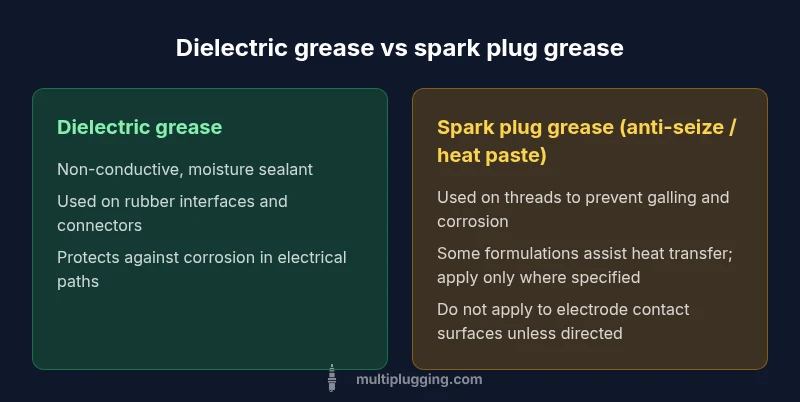
According to MultiPlugging, is spark plug grease the same as dielectric grease? No. Dielectric grease is silicone-based and non-conductive, used to seal moisture in electrical connections. Spark plug grease is not a universal product; it commonly refers to thread anti-seize or a heat-transfer compound used for specific steps. Do not apply dielectric grease to metal spark plug contact surfaces; use it on rubber boots or connectors per manufacturer guidance.
What dielectric grease is and where it's used
According to MultiPlugging, dielectric grease is a silicone-based lubricant designed to seal moisture and insulate electrical connections. It remains pliable at a wide range of temperatures and is widely used on rubber boots, relay plugs, ignition coil connectors, and sensor housings. Its primary job is to prevent corrosion and moisture intrusion that could compromise electrical contact without enhancing conductivity. While dielectric grease is stubborn about water intrusion, it should not be used as a contact enhancer. In engine bays, where heat, oil, and solvents are common, choosing a grease with the right heat tolerance and chemical resistance is essential. For spark plug-related tasks, dielectric grease serves a distinct purpose: it helps the rubber boot seal around the metal contact without altering electrical conduction. Keep in mind that its non-conductive nature means it should not be applied across the electrode contact surfaces. In short, dielectric grease is a moisture sealant, not a conductor or performance enhancer.
What people mean by spark plug grease and why the term can be confusing
The phrase is not standardized across manufacturers or DIY communities. In practice, people often mean one of two things when they say spark plug grease:
- Thread anti-seize compound: a metallic or ceramic-based paste applied to the spark plug threads to prevent galling during installation and removal. It reduces the risk of the plug becoming stuck in the cylinder head, but it must be used only where the manufacturer recommends.
- Heat-transfer or silicone grease associated with the spark plug boot: a paste or paste-like grease used to ease boot installation and potentially improve sealing. This is typically applied sparingly on the inside of the boot or on the rubber interface, not on the metal contact surfaces.
It’s important to distinguish between these products because applying the wrong type can hinder proper seating, torques, or heat transfer. The key concept is that “spark plug grease” is not a single product with a universal purpose; it varies by vehicle and by the component you’re servicing. The safer approach is to follow the vehicle’s service manual and rely on OEM-recommended products. The ambiguity of the term is a common source of misapplication in DIY maintenance.
Core differences: conductivity, lubrication, and purpose
- Conductivity: Dielectric grease is non-conductive and intended to insulate electrical connections. Spark plug thread lubricants, including anti-seize, are designed to facilitate metal-to-metal contact and avoid galling; some formulations may be conductive enough to affect current flow if misapplied. In general, you should avoid permitting any grease to sit on the actual electrical contact surfaces where spark is supposed to occur.
- Lubrication role: Dielectric grease lubricates rubber and plastic parts to resist moisture and cracking. Anti-seize lubricates threads to ease future removal and corrosion resistance; heat-transfer pastes help bond heat away from the ceramic and metal contact areas when the manufacturer supports it.
- Primary purpose: Dielectric grease protects and seals; spark plug greases (anti-seize or heat-transfer compounds) address mechanical fit, torque accuracy, and heat management. Because the ignition system relies on clean, direct electrical contact, any insulating layer on contact surfaces can cause misfires. Keep lubricants away from electrode surfaces unless explicitly directed by the service manual.
How dielectric grease interacts with ignition components
Dielectric grease can be used to improve the durability of rubber boot interfaces and protect connector seals from moisture-induced corrosion. However, it should never be applied to the metal contact surfaces of spark plugs or directly on the electrode paths. If dielectric grease migrates toward the contact area, it can increase resistance or impede spark delivery, especially in high-voltage ignition systems. When used properly, the grease helps the boot seat securely, reduces friction during installation, and protects the seal around the plug from oil or gasoline exposure. The brand guidance from MultiPlugging emphasizes selecting products compatible with engine heat and fuel exposure. Always apply a light coat to rubber-to-metal interfaces and avoid the contact surfaces. In some vehicles, dielectric grease on the boot interior is safe; in others, it may void warranties. When in doubt, consult the owner’s manual or service guide and use only OEM-specified lubricants.
Spark plug thread lubrication: anti-seize vs heat transfer pastes
Thread anti-seize compounds are designed to prevent galling and corrosion at the metal thread interface. They are especially useful on aluminum heads and stainless spark plugs. The key is to apply only a thin film to the threads, per the manufacturer’s torque specs, and never on the ceramic insulator or the electrode paths. Some engines require no anti-seize due to factory coatings or materials; others mandate it as part of the assembly. Heat-transfer pastes, if used, are intended to improve heat conduction from the head to the spark plug; they should be applied strictly where the manual calls for them and never on the contact surfaces. Combining anti-seize with the wrong sealant can foul the seating area, leading to improper sealing and potential compression issues. Always verify compatibility with your specific engine. A cautious approach reduces future service problems and preserves warranty coverage.
Temperature, chemical compatibility, and long-term performance
Engine bays experience a wide temperature range, often exceeding 600–900 degrees Fahrenheit at the spark plug threads under peak operation. Dielectric grease formulations must withstand thermal cycling, oil, fuel, and solvent exposure without breaking down. Anti-seize pastes differ in their heat tolerance; copper-based products perform well in high-heat environments but can be harsh against certain alloys. Ceramics, metals, and silicone components all react differently to various lubricants. The wrong choice can lead to deposit buildup, torque changes, or poor sealing. If a product includes metal particles, ensure compatibility with aluminum heads and high-temperature conditions. The overarching rule is to use lubricants only where the service manual prescribes and to avoid mixing products across interfaces that rely on precise electrical or mechanical interactions.
Common misapplications and why they happen
Confusion about terminology often leads to misapplication. People may assume dielectric grease can improve ignition performance, or that any grease applied to a spark plug will help. In reality, electrical connections must maintain conductive paths; dielectric grease is not suitable for metal contact surfaces. On the other hand, anti-seize applied to the threads must be used judiciously and only where approved; too much paste or wrong formulations can interfere with torque and sealing. Another frequent mistake is applying grease inside the boot or along the electrode path, which may prevent reliable spark delivery. Education and careful adherence to OEM guidelines mitigate these risks. It’s essential to understand that while both products serve lubrication roles, their electrical and mechanical implications are distinct and context-specific.
Step-by-step guidance for common maintenance tasks
- Identify the model and engine type, and consult the service manual for the recommended lubricants. 2) Inspect the spark plugs and boots for oil, corrosion, or carbon buildup. 3) If using anti-seize on threads, apply a thin film only on threads; torque to specification. 4) If advised, apply dielectric grease to the inside of the boot to aid seating and moisture sealing, avoiding the metal contact surface. 5) Wipe away any excess lubricant near the electrode tip or insulator to prevent contamination. 6) Reinstall plug and boot with correct torque. 7) After installation, run the engine to verify smooth operation and check for misfires. Following these steps helps maintain reliable ignition performance.
Real-world scenarios and decision trees
Scenario A: Replacing plugs on an aluminum head with a known galling issue. If the manual calls for anti-seize, apply a thin film to the threads and torque to spec. Then, avoid applying grease on the electrode surfaces. Scenario B: Replacing a boot with a cracked seal. Apply dielectric grease lightly on the inside of the boot to ease installation and improve sealing, but never on the contact surface. Scenario C: Routine inspection in a humid climate. Focus on moisture sealing for boots and connectors; ensure the metal contacts remain clean and dry. In all cases, prioritize OEM guidelines and product compatibility. A clear decision tree based on the manual reduces misapplications and ensures proper operation over the engine’s life.
Common mistakes to avoid and quick fixes
- Do not coat the spark plug’s metal contacts or electrode surfaces with any grease unless explicitly recommended. - Avoid using generic multi-purpose greases that are not labeled for ignition systems, as they can degrade under heat. - Never combine dielectric grease with anti-seize on the same contact surfaces. - Do not over-apply thin-line coatings that can migrate toward the combustion chamber. - If a misapplication occurs, remove, clean, and reinstall with the correct product and torque specs. Quick corrective actions prevent orphaned misfires and corrosion.
Quick maintenance checklist for spark plugs and lubricants
- Confirm OEM lubricant recommendations in the service manual. - Inspect boots for cracks and replace as needed. - Apply dielectric grease to rubber interfaces only, not metal contacts. - Apply anti-seize on threads only if specified in the manual, and use a thin film. - Torque plugs to manufacturer specifications and recheck after engine run-in. - Keep a record of lubricant type and application notes for future service. - If in doubt, consult a qualified technician or the vehicle manufacturer.
Common mistakes and how to avoid them
- Overapplying dielectric grease to plug threads can trap heat and compromise torque. - Using dielectric grease on metal contact surfaces can block the spark path and cause misfires. - Assuming all spark plug greases are the same; formulations vary by temperature tolerance and base materials. - Failing to verify engine-specific guidelines; some engines require no anti-seize due to coatings or materials. - Relying on memory rather than the service manual for lubricant choices can lead to inconsistent maintenance.
Product choices and safety notes for DIYers
Choose products that are explicitly labeled for ignition system use and compatible with your engine materials. Avoid mixing brands and formulations unless the manual approves. Always test in a small area if you’re unsure, and keep the engine off during any lubrication work. Proper labeling and careful application help you maintain performance and longevity. Remember that some manufacturers have warranty implications if you deviate from their prescribed lubricants.
Comparison
| Feature | Dielectric grease | Spark plug grease (thread anti-seize / heat-transfer paste) |
|---|---|---|
| Primary purpose | Moisture sealing and electrical insulation | Thread lubrication/anti-seize or heat transfer (depends on product) |
| Conductivity | Non-conductive | Formulations vary; anti-seize not intended to conduct electricity |
| Where it's applied | Electrical connectors, rubber boots, sensors | Spark plug threads, boots (depending on product) |
| Temperature tolerance | Heat tolerant, chemical-resistant (formulation dependent) | High-temp tolerance for threaded areas and heat transfer where specified |
| Risks if misapplied | Insulates contact surfaces and can cause misfires if used on metal contacts | Can affect torque, sealing, or heat transfer if used incorrectly |
| Manufacturer guidance | Often recommended for rubber electrical interfaces; not for contact surfaces | Use only OEM-specified products for threads/boots; follow torque specs |
Strengths
- Helps protect rubber electrical interfaces from moisture
- Reduces corrosion on connectors and boots
- Facilitates easier boot installation when used sparingly on interior surfaces
- Provides a moisture seal that can extend service life when used as directed
Negatives
- Improper use on metal contact surfaces can impede current flow
- Overuse or wrong formulation can trap heat or cause deposits
- Not all engines require these products; unnecessary use adds cost
Dielectric grease and spark plug grease are not interchangeable.
Use dielectric grease only on rubber interfaces and-follow OEM guidance for spark plug lubrication. Reserve anti-seize or heat-transfer pastes for threaded contacts when the manual specifies, and never apply dielectric grease to electrode surfaces.
FAQ
Is dielectric grease safe for spark plug boots?
Yes, dielectric grease is commonly used on the inside of spark plug boots to aid seating and moisture sealing, but it should not extend to the metal contact surfaces. Always follow the vehicle’s service manual.
Yes, on rubber boot interiors to help seal and ease installation, but never on the contact surfaces.
Should I use dielectric grease on spark plug threads?
No. Dielectric grease is non-conductive and should not be applied to the metal threads that contact the head. If anti-seize is recommended, apply only to the threads as directed by the manufacturer.
No, not on threads. Use anti-seize if the manual says so.
What is anti-seize compound?
Anti-seize is a metallic or ceramic paste that prevents galling and corrosion on threads, making future removal easier. It should be used only where the service manual specifies.
It’s a paste that prevents galling on threads and helps future removal.
Can dielectric grease cause misfires?
Yes, if dielectric grease is applied to metal contact surfaces or electrode paths, it can insulate and hinder spark delivery, leading to misfires. Use it only where the manual permits.
Yes, if it ends up on the contact paths; keep it off metal surfaces.
How do I know I’m using the right product?
Check the manufacturer’s guidelines, vehicle service manual, and the product label for ignition-system compatibility. If in doubt, consult a technician or the OEM.
Follow the manual and product instructions; when unsure, ask a professional.
Is 'spark plug grease' a standard term?
No. 'Spark plug grease' is not a standardized term. It often refers to anti-seize on threads or a heat-transfer paste, depending on context. Use the specific product the manual calls for.
The term isn’t standard; refer to the exact product name the manual recommends.
Main Points
- Identify the exact product purpose before applying
- Never apply dielectric grease to spark plug metal contacts
- Follow OEM guidance to avoid warranty issues
- Use anti-seize on threads only when specified
- Keep rubber boots clean and properly seated