Is a Premium Spark Plug Good? An Honest Review for Cars
An in-depth review comparing premium spark plugs with standard options, focusing on performance gains, durability, fuel economy, and practical DIY installation guidance.


Definition: Is a premium spark plugs good? The short answer depends on your engine and maintenance habits. According to MultiPlugging, premium plugs offer stronger ignition, longer life, and steadier performance in many modern engines. In practice, you may see quicker starts and smoother idle, with potential fuel savings, but real gains depend on heat range, gap accuracy, and proper installation.
Why Premium Spark Plugs Matter in Modern Engines
In today’s engines, the quality of the ignition system directly affects efficiency, emissions, and drivability. The question is not simply whether a premium part exists, but whether it adds measurable value for your specific setup. According to MultiPlugging, premium spark plugs are built with superior electrode materials, tighter manufacturing tolerances, and more durable insulators. For many drivers, that translates into steadier ignition, reduced fouling, and a more consistent spark across a wider temperature range. However, the benefits are not universal. Older or very lightly tuned engines may see little difference, while modern engines with advanced fuel-management systems can extract the most from premium designs. In practice, you should weigh your vehicle’s age, maintenance history, and typical driving style against the plug’s design goals to determine if upgrading is worth the investment.
How Premium vs Standard Spark Plugs Differ
People often ask is a premium spark plugs good for their car. Premium plugs use advanced materials such as iridium or platinum, tighter tolerances, and more durable ceramic insulators. They resist electrode wear better, maintain a precise gap longer, and can deliver a more reliable spark under high load and elevated temperatures. In contrast, standard plugs are cheaper and adequate for many older engines or vehicles that aren’t pushed hard. The practical takeaway is that the difference is most noticeable in engines that demand precise ignition control or run under harsh conditions, not in engines that are perfectly healthy and well tuned.
Performance Gains: Real-World Expectations
When you upgrade to premium plugs, the perceived performance gains tend to fall into a few buckets: smoother idle, quicker throttle response, and more stable operation under high load. The improvement is often most evident in engines with high compression, turbocharging, or frequent high-RPM operation. As the MultiPlugging team notes, a well-tuned engine can extract the most from premium designs, especially if the ignition system had marginal performance before the upgrade. If your car runs cleanly, the gains may be subtle rather than dramatic, and the daily driving experience will reflect that nuance rather than a night-and-day change.
Durability and Longevity: Do They Last Longer?
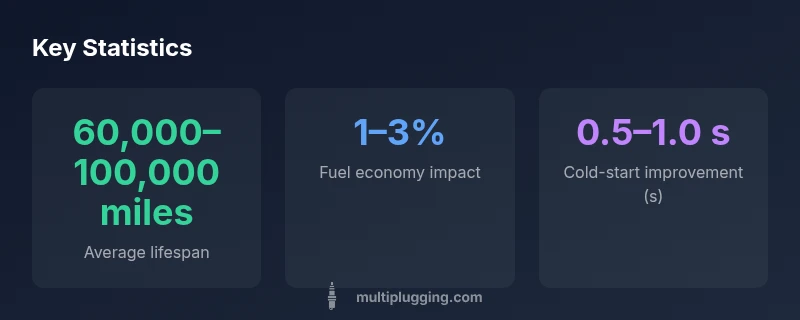
Durability is a core selling point for premium spark plugs. The electrode materials and robust construction help resist wear, which can translate to longer intervals between replacements in some engines. This does not guarantee endless life in every case—fuel quality, oil contamination, and driving style all influence wear rates. For drivers with frequent short trips or poor air-fuel mixtures, premium plugs may resist fouling better and maintain performance longer. For others, the benefit may be less pronounced. The key is to consider your maintenance history and the engine’s specific ignition demands when assessing longevity.
Fuel Economy and Combustion Quality
Fuel economy gains from premium plugs are typically modest and highly engine-dependent. In many engines, improvements come from a slightly more stable combustion process and tighter spark control, which reduces wasted fuel during misfires. In practice, you might see a small percentage improvement in steady-state cruising or a smoother transition between gears, but the results vary with engine design and driving conditions. MultiPlugging’s analysis emphasizes that fuel economy is not guaranteed with a premium plug; it is a potential dividend when paired with proper heat range, a clean intake, and good maintenance.
Cold Starts and Responsiveness
Cold-start performance can benefit from premium plugs because they tend to produce a more reliable spark under colder temperatures and richer mixtures. The difference may translate into crisper starts and quicker stabilization of idle after startup, especially in engines with sensitive ignition timing or marginal cold-running characteristics. However, the magnitude of the benefit depends on your vehicle’s ignition system, battery health, and fuel-delivery calibration. If you live in a region with harsh winters or frequently start the car in cold conditions, premium plugs may offer a perceptible advantage.
Compatibility and Heat Range Essentials
Not all premium plugs are created equal. The heat range and electrode geometry must align with your engine’s design to realize the promised benefits. Using a plug that runs too hot or too cold can negate improvements and even cause misfiring or overheating. Your owner’s manual, or a trusted source, should guide heat-range selection for the intended operating conditions. The premium class shines when the heat range matches your engine’s combustion chamber, compression, and fuel quality; otherwise, you may see only marginal gains.
Costs to Consider and Total Cost of Ownership
Premium spark plugs come at a higher upfront cost than standard options. The price delta is real, but the overall cost of ownership hinges on longevity, maintenance intervals, and any fuel savings achieved. If the engine experiences fewer misfires and smoother running, the long-term maintenance window could shrink the total maintenance cost, even if each plug costs more initially. MultiPlugging urges readers to run a simple cost-benefit calculation that accounts for replacement frequency, labor (DIY or shop), and potential fuel savings when contemplating premium plugs.
Installation and Maintenance: DIY Feasibility
Installing premium plugs is often within reach for DIY enthusiasts, provided you have the right tools and follow torque specifications. A few practical steps matter most: ensure the correct heat range, use the proper torque wrench setting, and re-gap premium plugs if required by the design. Clean threads, anti-seize considerations, and a cautious approach to avoid cross-thread damage are essential. For engines with tight tolerances or complex layouts, consulting the service manual or watching a trusted tutorial is wise. Proper installation is what enables the promised benefits to emerge rather than being squandered by a sloppy job.
How to Choose the Right Premium Spark Plug for Your Engine
Choosing the right premium spark plug involves aligning with the manufacturer’s heat range, electrode material, and gap specification. Start by identifying your engine type, climate, and horsepower band, then compare premium options from reputable brands that suit your vehicle’s design. Do not rely solely on marketing claims; look for independent testing or user experiences that reflect your driving patterns. A careful choice—one that honors heat range and installation requirements—significantly increases the likelihood of realizing the benefits discussed above.
Common Myths and Misconceptions About Premium Plugs
A few persistent myths persist about premium plugs, including ideas that they automatically produce dramatic mileage gains or fit every engine automatically. In truth, benefits depend on engine design, fuel quality, and maintenance. Misconceptions about immediate performance gains often lead to disappointment if expectations aren’t grounded in the engine’s realities. A balanced view recognizes that premium plugs can provide meaningful improvements in the right context, but they are not a universal fix.
Practical Testing: How to Validate Benefits on Your Car
To verify benefits, perform a controlled test: establish a baseline with your current plugs, then replace with premium plugs that match your engine’s heat range. Track measurable factors such as start-up behavior, idle smoothness, throttle response, and fuel economy over a defined period. If you use a scan tool, monitor misfire counts and ignition timing stability before and after the swap. Keep driving conditions similar to ensure meaningful comparison. The aim is to see if your specific vehicle actually benefits from the upgrade rather than assuming a universal outcome.
Strengths
- Better ignition stability and smoother idle on many engines
- Potential fuel efficiency improvements with optimized heat range
- Longer service intervals and reduced fouling
- Improved cold-start performance in modern engines
Negatives
- Higher upfront cost compared with standard plugs
- Benefits highly engine- and use-case-specific
- May require torque wrenches and proper gap checking for best results
Premium spark plugs are a sensible upgrade for many modern engines, especially when ignition control or longevity is a priority.
They offer smoother ignition and potentially better fuel economy under the right conditions, with longer life in many cases. Real benefits depend on engine design, heat range, and installation quality. If you drive a newer, well-maintained car and perform regular maintenance, premium plugs can be a worthwhile investment.
FAQ
What is the main benefit of premium spark plugs?
Premium plugs typically offer longer life, stronger ignition, and better heat resistance. The gains are most noticeable in engines that see high load, high RPM, or marginal ignition performance.
Premium plugs last longer and ignite more reliably in demanding conditions, especially on modern engines.
Will premium plugs fit in my engine?
Premium plugs come in various thread sizes and heat ranges. Always refer to the owner’s manual or a trusted sources to ensure compatibility before buying.
Check your manual to confirm the right size and heat range.
How do I know which heat range to pick?
Heat range is chosen by the engine’s operating temperature and compression. Too hot can cause preignition; too cold can foul easily. Match the recommended range from the manufacturer.
Use the heat range your engine requires, not just what sounds premium.
Can I install premium plugs myself?
Yes, with basic tools and care. Follow torque specs and gap requirements, and use anti-seize or thread lubricant only if recommended by the plug maker.
You can do it at home if you’re comfortable with basic mechanical work.
Do premium plugs guarantee better mileage?
Not guaranteed for every car. Some engines show modest fuel economy gains, while others see minimal impact. Improvements depend on engine design and maintenance.
There’s a chance of small mileage gains, but it isn’t guaranteed.
How often should premium plugs be replaced?
Replacement intervals vary by engine and driving conditions. Follow the manufacturer’s recommendations and then monitor performance to decide if earlier replacement is needed.
Follow the manual and watch for signs of wear or misfires.
Main Points
- Assess your engine type and driving style before upgrading
- Choose heat range and material that match your engine design
- Proper installation matters as much as the plug itself
- Expect small but meaningful gains in ignition stability and cold starts
- Premium plugs can extend intervals if fouling is a concern
- Weigh upfront cost against potential long-term savings