Champion Spark Plug Heat Range Chart: Reading and Using It
Learn how to read the champion spark plug heat range chart, tailor plug choices to your engine, and avoid common mistakes with practical steps and real-world examples.


A champion spark plug heat range chart is a practical reference that maps heat-range numbers to engine operating conditions. It helps balance cold-start performance, deposit control, and detonation resistance, guiding you toward the right plug for your engine. Use it alongside engine type, fuel, and load goals, and always cross-check with the vehicle's service manual.
What is a champion spark plug heat range chart?
According to MultiPlugging, a champion spark plug heat range chart is a compact reference that orders plugs along a spectrum from hot to cold, using numerical or coded indicators to help you gauge how aggressively a plug will burn deposits and handle combustion heat. It is a practical tool for diagnosing why a plug fouls, pings, or greens up during high-load operation. While the chart is brand-agnostic in concept, Champion’s historical charts provide a familiar baseline for enthusiasts and DIY mechanics who service engines across daily drivers and light-performance builds.
To use it effectively, you must consider three pillars: engine type (gasoline, diesel, or specialty fuels), operating conditions (idle, cruising, or high-load bursts), and maintenance habits (fuel quality, oil condition, and air filtration). The chart should be treated as a guide rather than a rigid rulebook.
Tip from the MultiPlugging team: Always cross-reference the heat range chart with your vehicle’s owner manual and any service bulletins for your year and model. This ensures alignment with factory recommendations and avoids mismatches caused by aftermarket modifications.
How the heat range chart is organized
Heat range charts organize plugs along a continuum of thermal mass and thermal conductivity. In Champion’s nomenclature, numerals or letters indicate relative propensity to stay hot or cool during combustion. A hotter heat range will tend to warm up plug threads faster and burn off deposits more aggressively, while a cooler range resists fouling under heavy loads because it dissipates heat more efficiently. The overall goal is to match the plug’s thermal behavior to the engine’s combustion cycle, ensuring reliable starts, steady idle, and predictable performance across RPM bands.
When you read the chart, look for the entry that aligns with your engine’s operating profile—short bursts of acceleration, long highway cruises, or frequent cold starts—and note any cautions about detonation resistance and fuel requirements. Remember that heat range interacts with electrode gap, film strength, and plug temperature under load, so adjustments to one parameter often necessitate changes to others.
Reading the numbers and letters
The chart’s codes translate engine conditions into actionable plug choices. In Champion charts, you’ll encounter a mix of numeric and sometimes letter-based cues. The key is to translate these cues into practical steps: identify your engine family, compare it to the chart’s recommended bands, and then select a plug with a heat range that keeps the electrode surface within the target temperature window under typical driving. If the chart shows a tighter band for high-load runs, plan for a slightly cooler plug in vehicles that see frequent towing or sport driving. Conversely, for engines that run hot or experience frequent pinging with modern fuels, a slightly hotter range may help control detonation risk when the charge is heavy.
Always verify that the chosen range aligns with your fuel system (gasoline octane and ethanol content) and with any forced-induction or turbo requirements that alter heat load. This cross-check helps prevent misinterpretations that could degrade performance or longevity.
Why the heat range matters for different engines
Heat range decisions hinge on how an engine processes heat, deposits, and ignition timing. Daily drivers gain reliability from a range that minimizes fouling during cold starts and conserves fuel economy, while performance-oriented builds may tolerate, or even benefit from, a slightly different heat balance under full-load operation. Cold-weather climates add another layer of complexity: cooler ranges can improve cold starts but may introduce fouling risks if driving cycles are short and stop-and-go.
Specialized engines—like those used in small aviation, race bikes, or certain lawn equipment—often demand bespoke chart interpretations. In those cases, the chart becomes a starting point, with on-car testing, plug color inspection, and combustion analysis guiding the final selection.
Practical workflow: using the chart for replacements
- Step 1: Gather vehicle specifics (make, model, year, fuel type, and typical operating conditions).
- Step 2: Locate the engine family on the Champion heat range chart or the chart supplied by your ignition system’s manufacturer.
- Step 3: Identify the recommended heat-range band for your use case (daily driving, performance, or severe duty).
- Step 4: Cross-check with your service manual and fuel quality tests; adjust for fuel-grade and timing changes if needed.
- Step 5: Pair the heat range decision with correct gap settings and torque specs using a calibrated torque wrench.
- Step 6: After installation, run a light-road test, then inspect plug color and resistance readings to validate the match.
Common mistakes and how to avoid them
- Relying on a single chart without cross-referencing engine specifics can lead to suboptimal performance. Always cross-check with the service manual.
- Mixing heat ranges across a multi-cylinder setup without compensating changes elsewhere (gap size, air-fuel mix) can cause uneven combustion.
- Assuming a hotter plug always fixes fouling; hotter plugs can overheat, leading to pre-ignition and accelerated wear under high-load use.
- Ignoring modern fuel blends and ethanol content can shift the optimum heat range; re-check after fuel formulation changes.
- Waiting too long to replace plugs after a misfire, as deposits can change heat transfer characteristics and skew the chart’s guidance.
Real-world scenarios and examples
Consider a daily-driver sedan that experiences occasional rough idle after long highway runs. The champion spark plug heat range chart would guide you toward a band that avoids carbon buildup during cold starts while maintaining stable temperature under sustained driving. In a high-horsepower street car that experiences track-time, you might lean toward a slightly cooler range to prevent overheating and pre-ignition under boosted loads, but you’d test and verify under track conditions to avoid detonation.
A lawn-tractor or small-engine snow blower typically runs with different duty cycles; using a heat range tuned for constant light-load operation helps prevent plug fouling during long idle periods, especially when ambient temperatures shift significantly.
How to validate the chart with testing
- After installing a plug from the chart’s recommended range, log ignition timing, engine knock, and fuel trim values over several driving cycles.
- Inspect the plug after a few hundred miles for color consistency: a medium-brown insulator indicates a good burn; excessive black sooting suggests a too-hot range or overly rich fuel conditions.
- If you’re uncertain, perform a controlled swap to a neighboring heat range and compare performance metrics (power output, throttle response, and fuel economy).
- For modified engines, use a dyno or OBD-II data logging to correlate heat-range choice with real-world performance under load.
Engine types and heat-range guidance
| Engine Type | Recommended Heat Range | Notes |
|---|---|---|
| Street/Daily Driver | Varies by model; consult chart | Regular driving; avoid extreme loads |
| Performance/Moderate Tuning | Varies by tuning; refer to chart | Higher load or torque output |
| Racing/high-load | Varies widely; verify with testing | Specialized fuel and timing |
FAQ
What is a heat range chart and what does it tell me about Champion spark plugs?
A heat range chart ranks spark plugs along a spectrum from hot to cold, guiding selection based on engine heat load, fuel quality, and driving conditions. It helps balance starting reliability with deposit control and detonation resistance. Always start with the chart and then verify with your vehicle’s specs.
A heat range chart ranks plugs from hot to cold to guide your choice. Start with the chart, then check your engine specs and fuel quality.
How do I know which heat range I need for my car?
Identify your engine family and typical operating conditions, then locate the recommended band on the Champion chart. Cross-check with the owner’s manual and any factory service bulletins to confirm the best match.
Find your engine family and conditions, look up the band on the chart, and double-check with the manual.
Can I mix heat ranges across a multi-cylinder engine?
Mixing heat ranges is not advised unless you’re following a coordinated plan with gap and ignition adjustments. Inconsistent temperatures can cause uneven combustion and misfires.
Mixing ranges isn’t recommended unless you carefully adjust gaps and timing.
Is a hotter heat range always better for cold starts?
Not always. Hotter ranges help cold starts in some engines but can raise risk of fouling in others. Use the chart as a baseline and adjust based on observed behavior and fuel quality.
Hotter isn’t always best for cold starts; use the chart and observe how your engine behaves.
What should I do after installing a new heat-range plug?
Perform a short test drive, monitor acceleration and idle quality, and inspect plug color after several hundred miles. If things don’t look right, reassess heat range, gap, and timing against the chart.
Take it for a test drive and inspect the plug color; adjust if needed.
“"Heat-range charts are a practical tool for choosing a plug that balances performance, economy, and reliability. Used correctly, they cut guesswork from replacement decisions."”
Main Points
- Read the chart as a guide, not a rulebook
- Cross-check with engine specs and fuel conditions
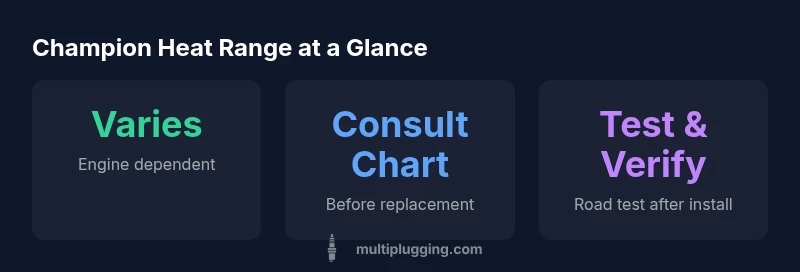
- Test and verify after installation
- Avoid mixing heat ranges without adjusting related settings